
DevOps Explained: Lifecycle, Tools, and Real-World Applications
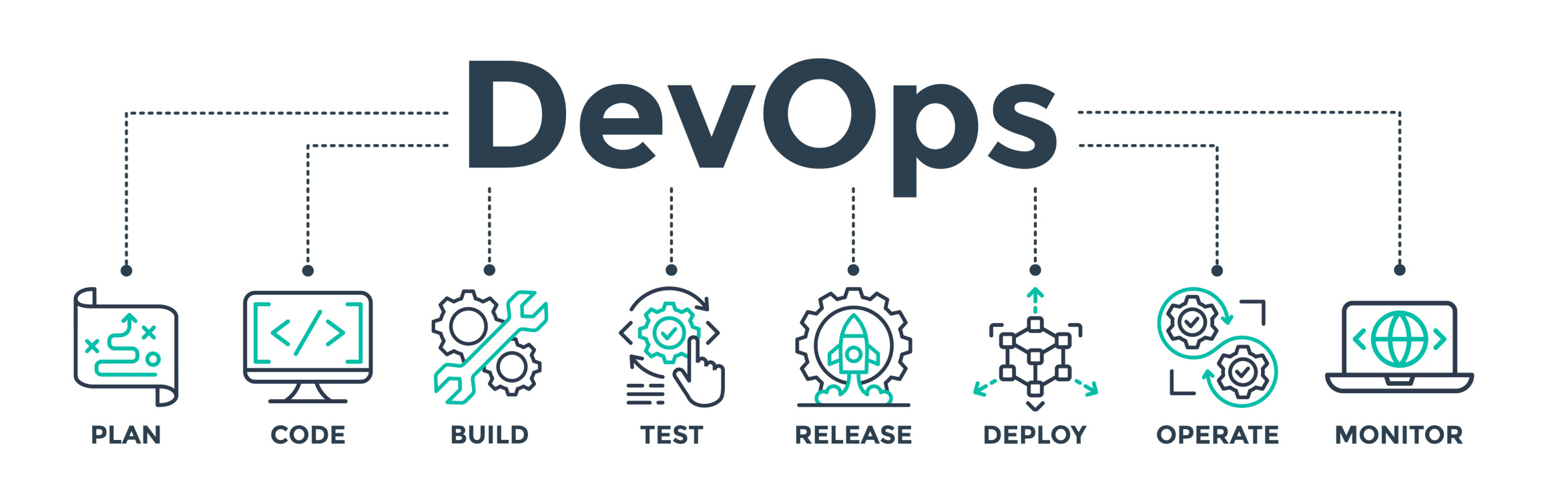
Modern digital businesses operate in an environment where speed, reliability, and security are no longer optional. Customers expect frequent updates, seamless performance, and uninterrupted access to applications. Traditional IT models, where development and operations teams work in isolation, struggle to meet these expectations. This challenge led to the emergence of DevOps.
DevOps is not a tool, technology, or job role. It is a collaborative approach that aligns development and operations teams to deliver software faster, more reliably, and at scale. By combining culture, automation, and continuous feedback, DevOps has become the foundation of modern software delivery.
What Is DevOps?
DevOps is a set of practices that brings together software development and IT operations into a single, shared responsibility model. Instead of treating development and deployment as separate phases handled by different teams, DevOps promotes collaboration throughout the entire software lifecycle.
At its core, DevOps focuses on breaking down silos, enhancing communication, and automating repetitive tasks. This enables teams to deliver software continuously while maintaining system stability and performance. In simple terms, DevOps enables organizations to move faster without compromising quality
Why DevOps Is Important for Businesses
As applications grow more complex and customer expectations for speed and reliability increase, businesses often face deployment failures, slow release cycles, and scalability challenges. DevOps helps organizations overcome these issues by introducing automation, continuous integration and continuous delivery (CI/CD), and real-time monitoring across the software development lifecycle.
By enabling seamless collaboration between development and operations teams, DevOps improves release frequency and reduces downtime. Organizations that implement DevOps achieve faster time-to-market, higher system reliability, and reduced operational costs. Most importantly, DevOps aligns IT operations with business goals, allowing companies to scale efficiently, respond quickly to market changes, and deliver consistent customer experiences.
The DevOps Lifecycle Explained
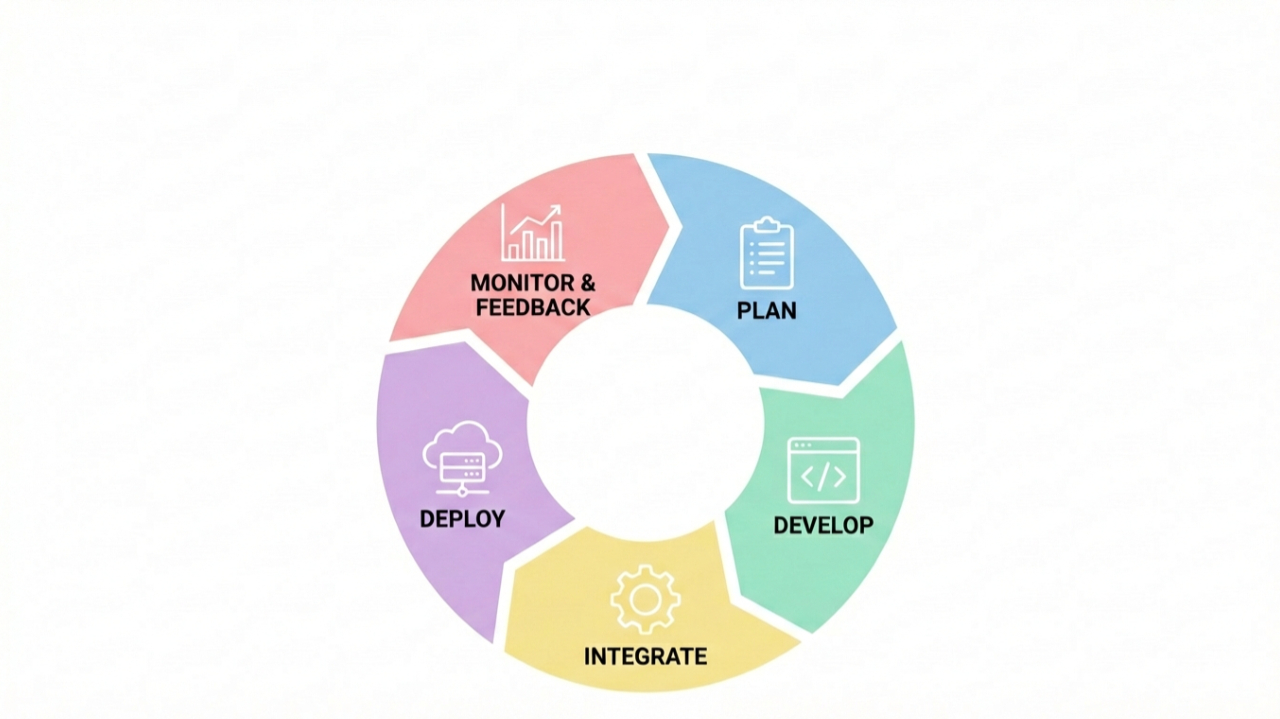
The DevOps lifecycle is a continuous loop rather than a linear process. Each stage builds upon the next, enabling continuous improvement and rapid delivery
The lifecycle begins with planning, where teams define requirements and priorities. Development follows, with code written and managed using version control systems. Continuous integration ensures that every code change is automatically built and tested. Continuous delivery or deployment then moves validated code into production environments. Finally, monitoring and feedback provide valuable insights into performance, security, and user experience, enabling teams to refine future releases.
CI/CD Pipeline Explained
A CI/CD pipeline is the technical backbone of DevOps and modern software delivery. It automates the process of moving code from development to production, reducing manual effort, minimizing human error, and enabling faster, more reliable releases. For businesses managing complex applications and rising customer expectations, CI/CD is essential for improving software quality, deployment speed, and overall operational efficiency.CI/CD Pipeline Explained
Continuous Integration (CI) ensures every code change is automatically built, tested, and validated as soon as it is committed, helping teams catch bugs early and maintain consistent code quality. Continuous Delivery (CD) keeps applications in a deployable state through automated testing, security checks, and environment validation, while Continuous Deployment pushes approved changes directly to production once all checks pass. A strong CI/CD pipeline often includes automated unit and integration testing, code quality scans, container builds, infrastructure automation, and monitoring, helping businesses achieve faster time-to-market, reduced downtime, and continuous feedback for ongoing improvement.
DevOps Tools and Technologies
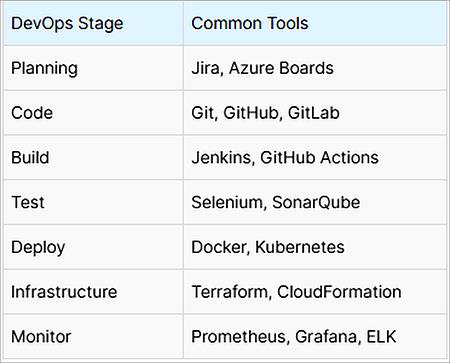
DevOps relies on a wide range of tools that support automation and collaboration at each stage of the lifecycle. Version control tools manage source code, CI/CD tools automate builds and deployments, container technologies ensure consistent environments, and monitoring tools provide visibility into system health.
When these tools are used together, they create a streamlined delivery pipeline that improves efficiency, reduces errors, and supports scalability across cloud and on-premises environments.
DevOps Tools Mapped to Each Lifecycle Stage
DevOps vs Traditional IT
Traditional IT | DevOps |
Siloed teams | Cross-functional teams |
Manual deployments | Automated pipelines |
Infrequent releases | Continuous delivery |
Reactive troubleshooting | Proactive monitoring |
Slow scaling | Cloud-native scaling |
Real-World DevOps Use Cases
DevOps for Startups
-
Faster MVP launches
-
Lower infrastructure costs
-
Rapid experimentation
DevOps for Enterprises
-
High availability systems
-
Compliance and governance
-
Standardized deployments
DevOps for FinTech & Crypto
-
Secure CI/CD pipelines
-
Zero-downtime deployments
-
Regulatory compliance
DevOps for SaaS Companies
-
Frequent feature releases
-
Improved customer experience
-
Scalable cloud infrastructure
DevOps in Cloud-Native Environments
Cloud computing has significantly accelerated the adoption of DevOps by enabling faster provisioning, scalable infrastructure, and on-demand resource management. Cloud-native DevOps allows teams to automatically provision infrastructure, scale workloads instantly, and recover quickly from failures using cloud platforms like AWS, Azure, and Google Cloud. This approach improves agility, reduces deployment time, and supports modern application architectures such as microservices and containers.DevOps in Cloud-Native Environments
By using Infrastructure as Code (IaC) tools like Terraform or CloudFormation, organizations maintain consistency across environments and prevent configuration drift. Cloud-native DevOps also enables cost optimization, as businesses pay only for what they use and can automatically scale down resources during low demand. In addition, cloud-native monitoring and logging improve visibility into application performance and infrastructure health. Overall, DevOps in cloud-native environments helps businesses achieve faster delivery, better reliability, improved scalability, and more efficient cloud operations.
DevOps and Security: The Rise of DevSecOps
Security can no longer be treated as a final checkpoint at the end of development. DevSecOps extends DevOps by embedding security into every stage of the software development lifecycle, ensuring secure delivery without slowing down releases. With increasing cyber threats and compliance requirements, DevSecOps has become essential for organizations building cloud based and customer-facing applications.
With DevSecOps, security testing is automated, vulnerabilities are detected early, and compliance is enforced through code. This includes automated vulnerability scanning, secure code analysis, container security, and identity access controls. DevSecOps also promotes a shared responsibility culture where developers, security teams, and operations work together. By integrating security into CI/CD pipelines, businesses can reduce risk, prevent breaches, and meet regulatory standards while still delivering software at high speed.
Measuring DevOps Success
Successful DevOps adoption is measured using performance metrics rather than assumptions. Tracking the right DevOps KPIs helps organizations evaluate software delivery speed, system reliability, and operational efficiency. These insights allow teams to improve release quality while aligning IT outcomes with business goals
Key DevOps metrics include:
- Deployment Frequency: How often releases reach production
- Lead Time for Changes: Time taken from code commit to deployment
- Mean Time to Recovery (MTTR): How quickly teams restore services after failure
- Change Failure Rate: Percentage of deployments that cause incidents or rollbacks
High-performing DevOps teams consistently improve these metrics, resulting in faster time-to-market, fewer production issues, and better customer experiences. Many organizations also track supporting indicators like system availability, release success rate, automation coverage, and incident response time to gain deeper visibility.
By measuring DevOps success using clear data, businesses can identify bottlenecks, reduce downtime, optimize CI/CD pipelines, and continuously strengthen their DevOps strategy for scalable growth.
Frequently Asked Questions
DevOps is a culture and set of practices supported by tools.
Yes. DevOps helps small teams achieve speed and stability with fewer resources.
No, but cloud platforms significantly enhance DevOps effectiveness.
DevSecOps adds security into every DevOps stage.
Conclusion: Optimize Cloud Costs, Don’t Just Cut Them
DevOps has transformed how modern software is built, delivered, and operated. By combining collaboration, automation, cloud technologies, and security, DevOps enables organizations to innovate faster and scale with confidence. For businesses building digital products today, DevOps is no longer optional; it is a strategic advantage that drives growth, reliability, and customer satisfaction.
If your organization is looking to adopt or optimize DevOps and DevSecOps practices, expert guidance can accelerate the journey. At AS13.AI, we help businesses build secure, scalable DevOps pipelines, cloud infrastructure, and automation workflows that improve delivery speed without compromise. Contact AS13.AI today to schedule a call and get a customized DevOps roadmap for your organization.
Blogs


Office Location
5th Floor, 1174, 24th Main Rd 2nd Sector,
Garden Layout, Sector 2, HSR Layout, Bengaluru,
Karnataka 560102
Email Us: info@as13.ai
Follow Us


Roles
AI
Cyber Security
