
The Practical Blueprint for IT Cost Optimization
IT cost optimization is one of the most misunderstood priorities in modern organizations, because when leadership says “optimize,” it often feels like a polite way of saying, “Cut costs, move faster, and please don’t break anything.” For IT leaders, cloud teams, and engineering managers, that pressure hits instantly because tech spend isn’t just a spreadsheet problem; it’s tied directly to uptime, security, delivery speed, customer experience, and even the company’s reputation. And the hard part is this: you’re expected to reduce costs while maintaining high performance and low risk.
The reality is that most cost-cutting measures don’t fail on paper; they fail in production, when teams are forced to do more with less, and the hidden costs manifest as outages, technical debt, slower releases, and burned-out personnel. That’s when “savings” turn into a much bigger bill later. True optimization isn’t about being cheap or blindly trimming budgets; it’s about eliminating waste with a clear strategy, creating cost visibility across teams, and freeing up resources so the business can reinvest in innovation, security, and long-term resilience.
What Does IT Cost Optimization Actually Mean Today?
Modern IT cost optimization is a continuous discipline focused on ensuring technology spend directly aligns with measurable business outcomes such as performance, availability, security posture, and delivery velocity. It covers cloud infrastructure, SaaS licensing, security tooling, managed services, and operational overhead, where costs often grow silently due to over provisioning, redundant tools, and poor governance. The goal is not budget cutting it is eliminating waste, rightsizing resources, consolidating overlapping platforms, and enforcing controls across provisioning and procurement. The real shift is moving from “How do we reduce costs?” to “Is this spend justified, right-sized, and delivering the expected ROI?”
The Core Pillars: Where Is Your Budget Really Going?
To make a meaningful impact, you need to look at the structural areas where waste naturally accumulates. Here are the three main culprits.
1. Cloud FinOps: Taming the Monthly Bill Shock
The cloud promised ultimate agility, but for many organizations, it just delivered unpredictable, eye-watering monthly bills. FinOps (Cloud Financial Operations) brings much-needed financial accountability to your engineering teams.
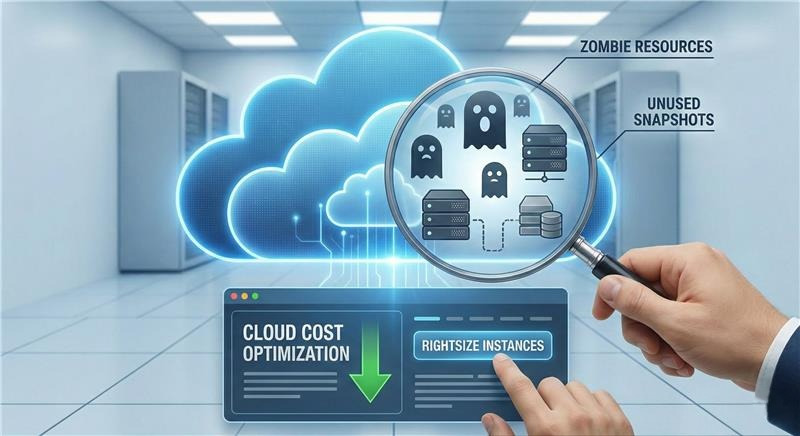
- Hunt Down "Zombie" Resources: It is incredibly common for a developer to spin up a test environment and simply forget about it. Audit your environment for unattached IP addresses, idle virtual machines, and legacy snapshots. You are essentially paying rent on empty apartments.
- Stop Over-Provisioning: Engineers naturally want to ensure performance, so they often provision more compute and memory than a workload actually needs. Use observability tools to rightsize your instances based on historical data.
- Commit to Discount Models: If you have workloads running 24/7, paying on-demand prices is leaving money on the table. Shift predictable workloads to Reserved Instances or Savings Plans.
2. The SaaS Junk Drawer (Application Rationalization)
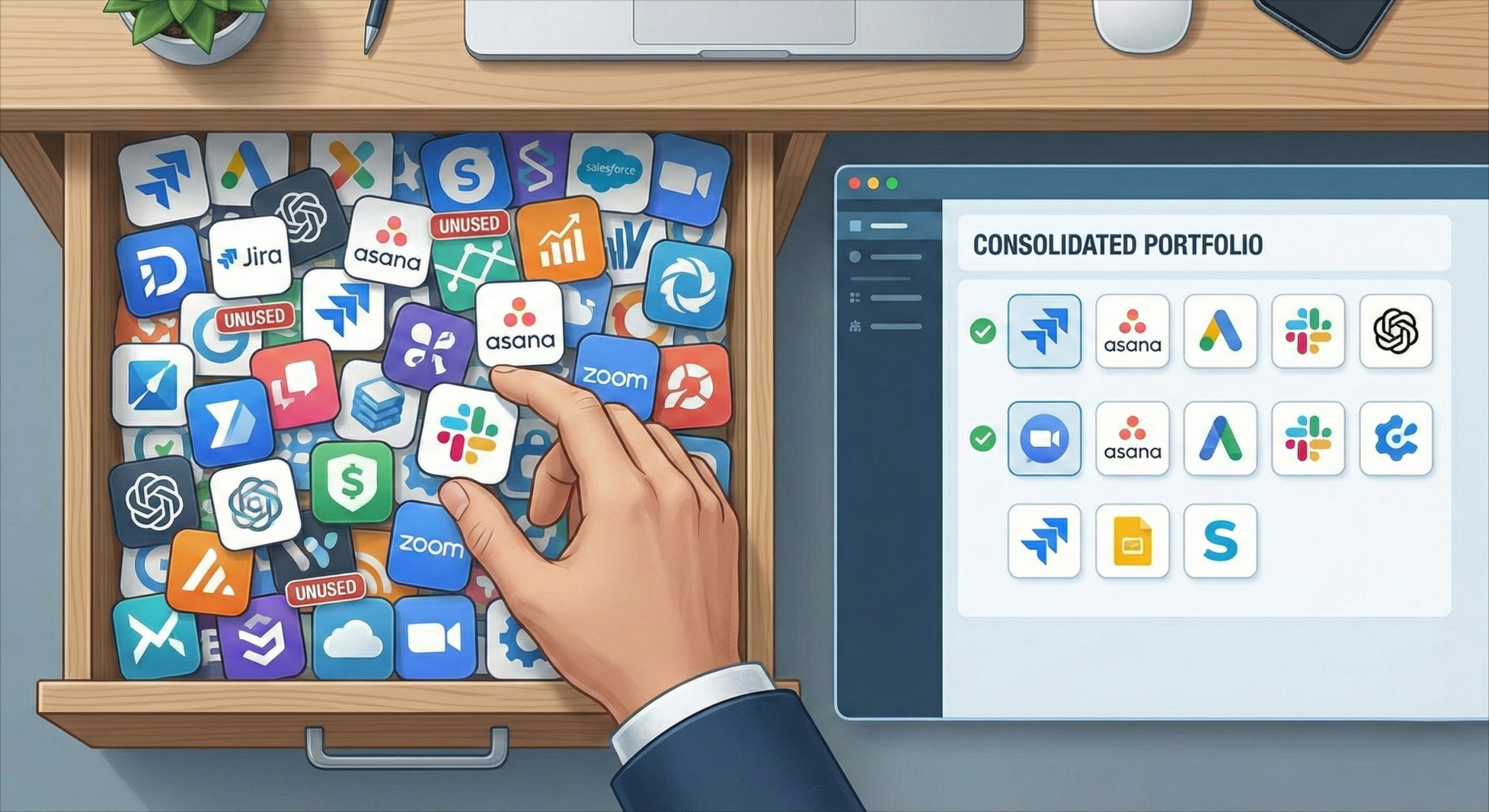
Think of your enterprise software like a junk drawer. Over the years, you accumulate tools you forget you even have. Application Portfolio Management is the process of cleaning that drawer out. Conducting a SaaS audit can feel like untangling a massive knot, but breaking it down into these four phases makes it manageable and highly effective.
Phase 1: Discovery (Shining a Light on Shadow IT)You can't optimize what you can't see. Your first goal is to build a master inventory of every application currently costing the company money.
- Follow the Money: Pull expense reports and corporate credit card statements from Finance. Look for recurring monthly charges from software vendors.
- Check Your SSO: Review the logs in your Single Sign-On provider (like Okta or Azure AD). What apps are actively connected?
- Use a Discovery Tool: If you have a Cloud Access Security Broker (CASB) or a dedicated SaaS management platform, run a report to identify unapproved apps operating on your network.
Phase 2: Categorization & Utilization Analysis. Once you have your list, it is time to figure out what these tools actually do and who is using them.
- Group by Function: Categorize applications by their purpose (e.g., CRM, Project Management, Design). For instance, when evaluating your development pipelines, you might find overlapping security scanning tools in your DevSecOps workflows that can easily be consolidated.
- Measure Active Usage: Don't just look at how many licenses you bought. Look at the last login dates. If a user hasn't logged in for 60 days, flag that license for reclamation.
Phase 3: Rationalization (The "Keep, Consolidate, or Cancel" Phase). This is where the actual savings happen. Work closely with department heads to make data-driven decisions.
- Consolidate Overlap: If Marketing is using Asana, Engineering is using Jira, and HR is using Monday.com, work toward migrating to a single, enterprise-wide project management tool.
- Downgrade Tiers: Move power users to premium tiers and shift casual users to basic or free "viewer" licenses.
- Cancel and Reclaim: Terminate unused subscriptions and harvest inactive licenses into a central pool for future onboarding.
Phase 4: Establish Continuous Governance. Prevent the SaaS junk drawer from filling up again.
- Centralize Procurement: Mandate that all new software purchases must go through a standardized IT review process for security and budget approval.
- Automate Offboarding: Ensure your HR systems are integrated with your IT provisioning so departing employees have their access (and licenses) revoked immediately
3. Automation and AIOps: Letting Humans Be Human
Your most expensive (and most valuable) IT asset is your people. If your highly paid engineers are spending their days resetting passwords or manually provisioning servers, your costs are inherently unoptimized.
- Automate the Mundane: Implement self-service portals and AI-driven ticketing for basic Tier-1 support requests.
- Infrastructure as Code (IaC): Standardize your deployments. When infrastructure is deployed via code, it reduces manual errors, speeds up delivery, and prevents the misconfigurations that often lead to bloated cloud bills.

Practical Strategies You Can Implement This Quarter
If you want to start moving the needle immediately, here are three realistic strategies you can tackle right now.
Have an Honest Conversation About "Shadow IT"
Shadow IT—when marketing or sales buys software without telling IT—happens because your teams are trying to move fast, and they perceive IT as a bottleneck. Instead of playing the role of the corporate enforcer, approach these teams with empathy. Find out why they bypassed standard protocols. Often, bringing these tools out of the shadows and integrating them properly saves money and eliminates massive security blind spots.
Don't Be Afraid to Challenge Your Vendors
Your vendor contracts are not set in stone. Software providers know the market is tight right now, and they want to keep your business.
- Consolidate your spend with fewer vendors to increase your bargaining power.
- Bring your actual usage data to your renewal meetings. If you are paying for 1,000 premium seats but only 400 people log in, negotiate a downgrade.
Rethink CapEx vs. OpEx
Where it makes sense for your architecture, continue the shift from heavy Capital Expenditures (buying physical servers that depreciate) to Operational Expenditures (cloud and SaaS). This allows you to pay purely for consumption and scale your spending up and down exactly as your business revenue dictates.
The Human Element: Building a Culture of Cost Awareness
The biggest misconception about IT cost optimization is that it is solely the CIO's or the Finance team's job. In reality, it is a cultural shift.
If your engineers don't understand the financial impact of their architecture decisions, your costs will always spiral. By giving development teams visibility into what their specific applications cost to run, you foster a culture where efficiency is treated as a core performance metric, right alongside speed and reliability.
Next Steps for Implementation
To implement IT cost optimization without disrupting delivery, start by establishing a clear baseline of current spend across cloud, SaaS, security tooling, managed services, and operational overhead. Once visibility is in place, prioritize quick wins such as removing idle cloud resources, rightsizing over-provisioned workloads, reclaiming unused SaaS licenses, and consolidating overlapping tools across teams. Next, enforce governance by centralizing procurement, integrating automated offboarding to stop license leakage, and building FinOps accountability so engineering teams understand the cost impact of their infrastructure decisions. Finally, reduce long-term operational waste by automating repetitive IT tasks through AIOps, self service workflows, and Infrastructure as Code, ensuring cost optimization becomes a repeatable operating model—not a one time cost-cutting exercise. If you want to accelerate this process, AS13.AI can help you assess cloud and SaaS spend, identify high-impact savings opportunities, and implement a structured optimization plan without compromising performance or security
Blogs


Office Location
5th Floor, 1174, 24th Main Rd 2nd Sector,
Garden Layout, Sector 2, HSR Layout, Bengaluru,
Karnataka 560102
Email Us: info@as13.ai
Follow Us


Roles
AI
Cyber Security
